01 · Model the improvement in 3D
Arrange equipment, robots and operators, and define the proposed work sequence in a virtual environment.
ProEye-X watches the operator’s time; AutoMES-X · AutoSim-X watches the flow of the plant. Click a card to visit the product site.
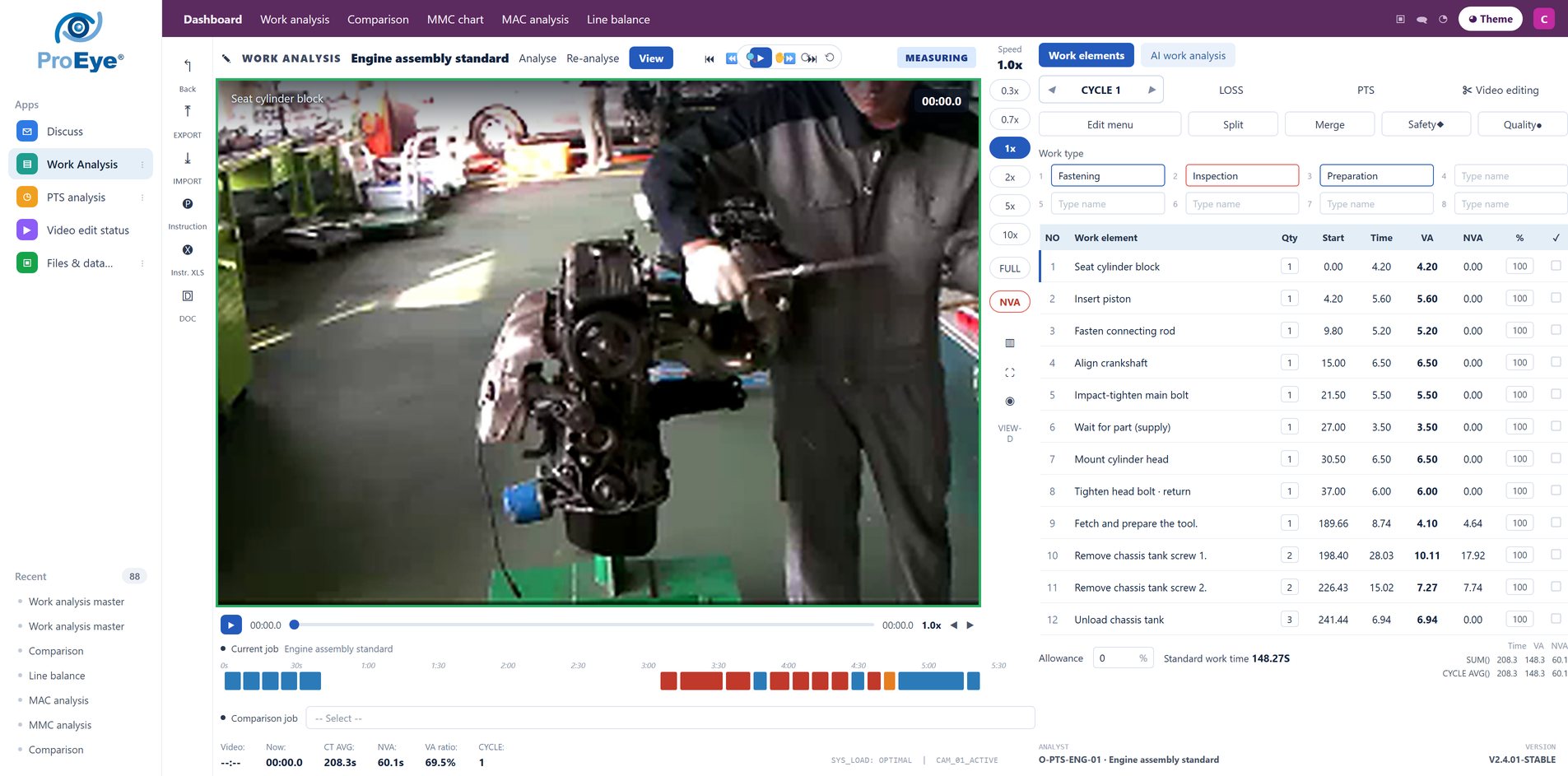
Video-based AI work analysis — a stopwatch measures once, video can be watched again and again. One recording covers analysis, comparison, standardisation and training.

Connect equipment data, work execution and quality traceability.
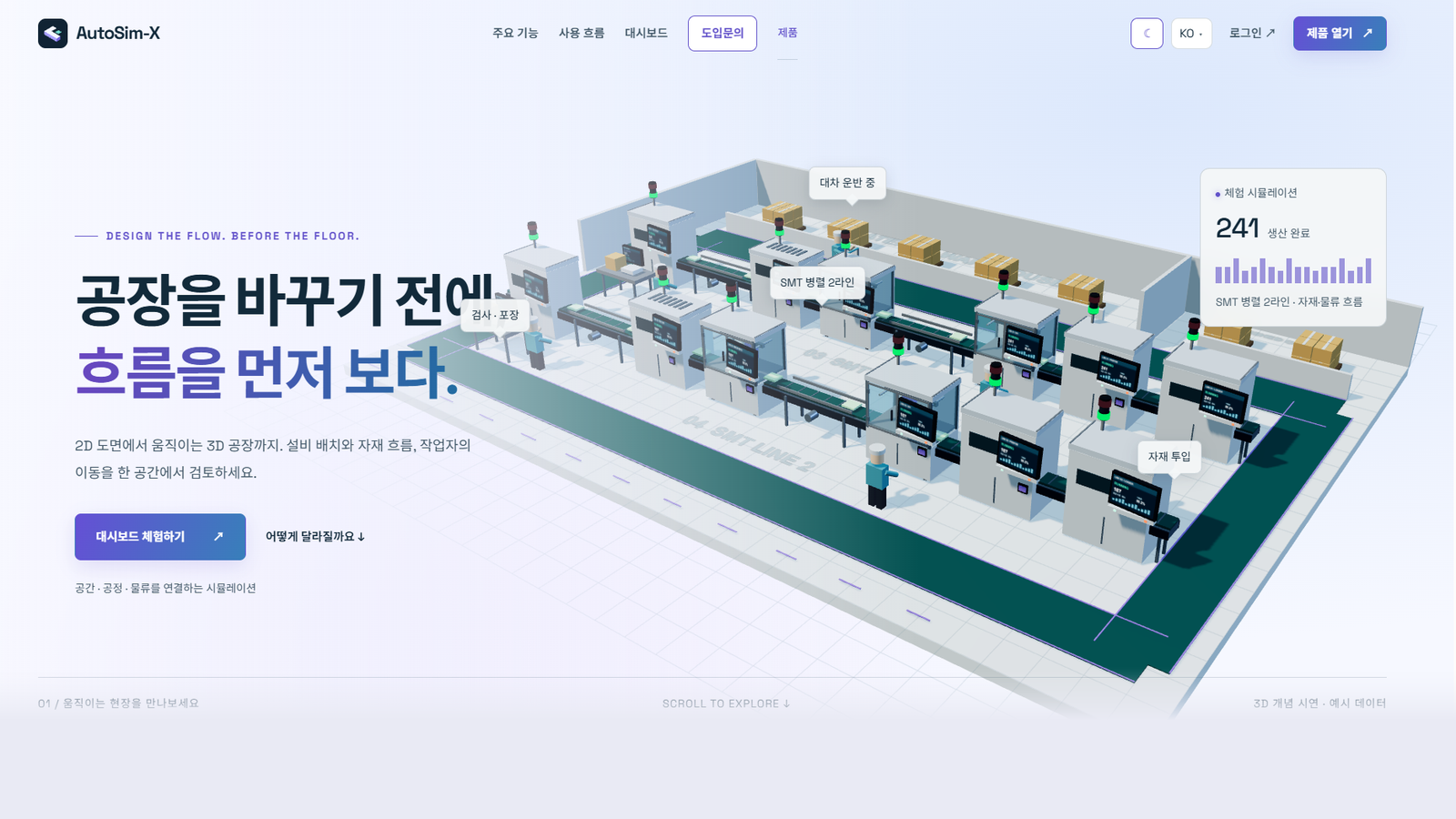
Design factory layouts and simulate material flow in 2D and 3D.
ProEye-X · 3D virtual work analysis
Build the proposed work environment and motions in 3D, then analyze the work elements and times of that virtual scenario. Alongside analysis of recorded work, evaluate expected outcomes quantitatively before implementing the change on the shop floor.
Arrange equipment, robots and operators, and define the proposed work sequence in a virtual environment.
Review motion times, total cycle time, and VA/NVA and waiting segments.
Compare with an AS-IS baseline or alternative scenario on the same basis to assess potential time savings and waste reduction.
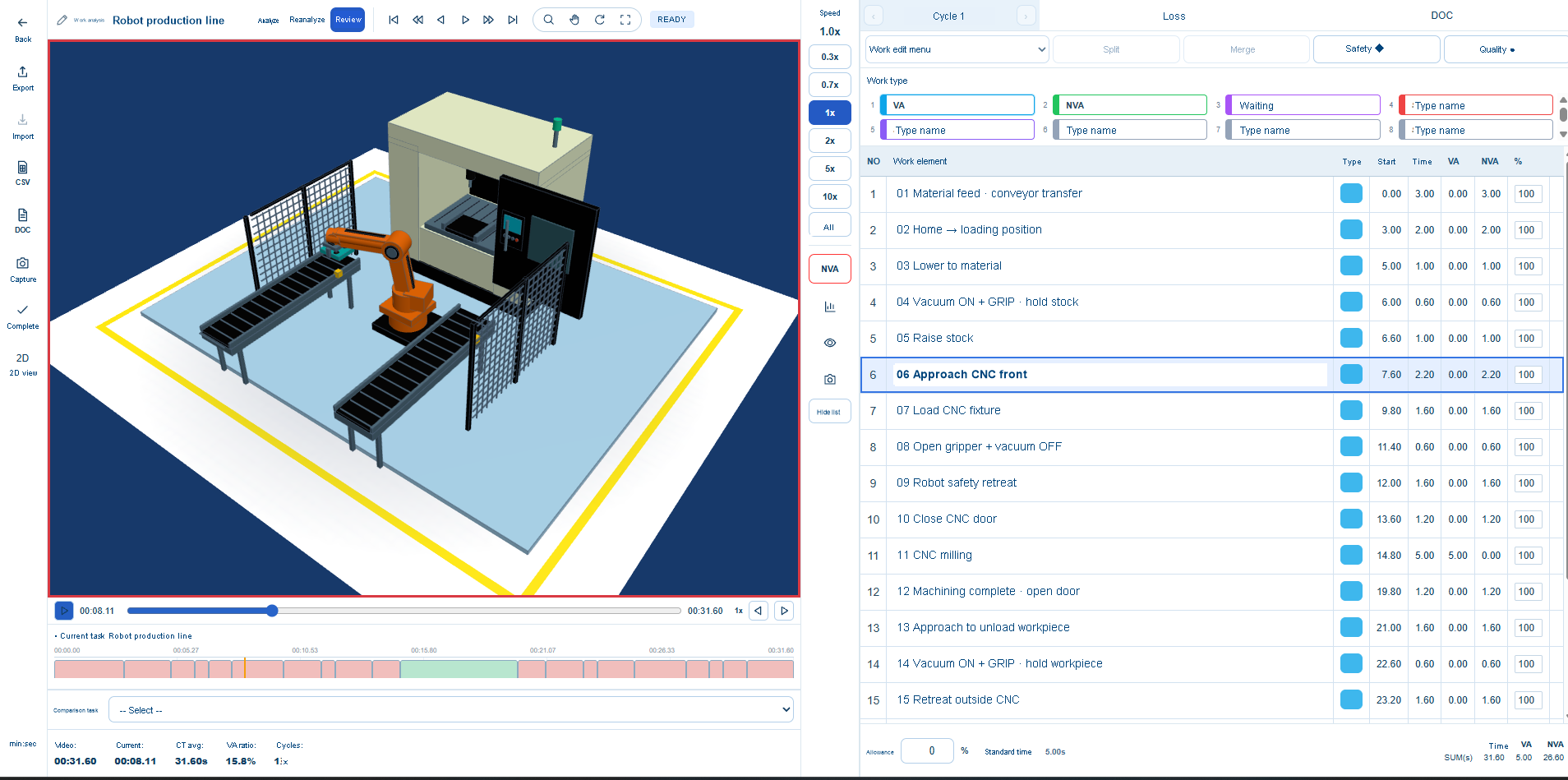
Review material loading, robot transfer, CNC loading, machining and unloading as timed work elements.
Review part handling, tool pickup, screw feeding and fastening, and product discharge through 3D motions and a time table.
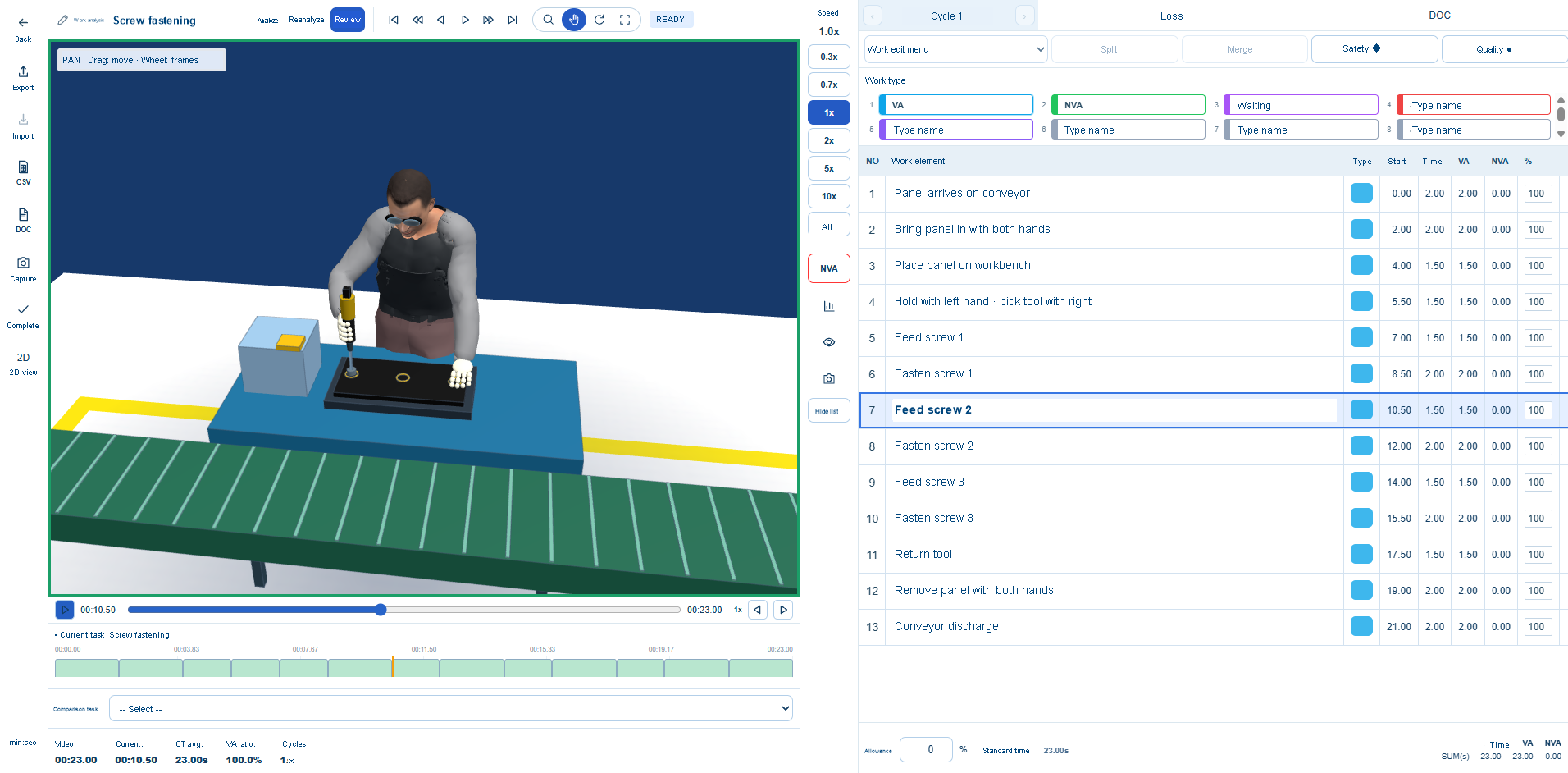
These images illustrate different tasks, not a before-and-after pair. TO-BE values are estimates based on the motions and times defined in the model, distinct from shop-floor measurements.
From the first consultation to on-site training, we follow the standard process refined over nearly 20 years on manufacturing floors.
We listen to your shop-floor challenge and propose the right approach — starting with whether it is a work-time problem or a process-flow problem.
Operator time analysis with ProEye-X, plant-wide flow management with AutoMES-X · AutoSim-X. Used together, the floor and the system see the same numbers.
We take responsibility through standard rollout and on-site training, and leave deliverables and training material so improvement keeps going after go-live.
Evaluation · technical questions · partnerships — get in touch and the person in charge will answer directly.